When an interview asks you to illustrate a professional basketball court on a whiteboard, the goal is less about perfect artistry and more about demonstrating spatial reasoning, attention to detail, and clear communication. Mastering this quick‑draw skill can set you apart in roles ranging from facility planning to sports‑tech design, because it shows you can translate complex layouts into a simple visual language under pressure.
Why do interviewers ask you to sketch a basketball court?
Employers look for three core competencies: accuracy in reproducing official dimensions, clarity in labeling key zones, and confidence
What are the essential measurements you must get right?
A professional NBA‑size court measures 94 feet long by 50 feet wide. Key lines to include:
- Baseline – the outer edges of the length.
- Sideline – the outer edges of the width.
- Three‑point arc – 22 feet from the basket in the corners, 23.75 feet at the top.
- Free‑throw lane – 16 feet wide, extending 19 feet from the baseline.
- Center circle – 12 feet in diameter, with the half‑court line at its center.
Remember that a whiteboard’s limited space demands proportional scaling; aim for a 2:1 length‑to‑width ratio and use a ruler or a straight edge to keep lines straight.
How should you organize your drawing process?
Break the sketch into three easy steps:
- Outline the perimeter. Draw a rectangle that respects the 94 × 50 proportion. Label the top, bottom, left, and right sides as “sidelines” and “baselines.”
- Insert the major zones. Add the half‑court line, center circle, and free‑throw lane. Use short, consistent dashes for the arc to indicate curvature without wasting space.
- Layer the details. Sketch the three‑point line, paint‑area markings, and the key (the painted rectangle beneath the basket). Annotate each with concise labels: “3‑pt,” “paint,” “basket.”
This sequential approach mirrors how architects draft construction plans, making it easier for interviewers to follow your thought process.
What trade‑offs should you consider while drawing on a whiteboard?
Speed versus precision is the primary balance. If you rush, you may misplace the three‑point arc; if you linger, you risk running out of board space. A practical compromise is to use a rough‑to‑exact method: sketch the outer rectangle quickly, then refine interior lines with a finer marker. Also, choose a marker color that contrasts sharply with the board (black or dark blue) to keep the diagram legible from a distance.
What realistic expectations should you set for yourself?
No one expects a museum‑quality illustration. Interviewers care that you can:
- Identify every major court component.
- Maintain correct proportional relationships.
- Explain each line’s purpose without hesitation.
A simple, well‑labeled diagram that demonstrates these points conveys competence more effectively than an overly intricate sketch riddled with errors.
How can you turn a basic sketch into a strong interview moment?
After finishing the court, narrate the diagram as you would a floor plan: “Here’s the baseline, and this is the three‑point arc extending 22 feet in the corners. The painted key is 16 feet wide, ensuring players have a clear visual of the restricted area.” Pause for a moment to let the interviewer absorb the visual, then invite questions: “Would you like me to elaborate on how the court dimensions influence crowd flow?” This engages the panel and shows you can pivot from drawing to strategic discussion.
What pitfalls should you avoid?
Common mistakes include:
- Mixing metric and imperial units, which creates confusion.
- Leaving essential lines unlabeled, assuming the viewer will recognize them.
- Crowding the board with excess commentary that obscures the drawing.
Sticking to a clean layout, using consistent units, and keeping annotations brief are the surest ways to sidestep these errors.
Should you practice before the interview?
Yes. A short daily drill—drawing the court in under two minutes—builds muscle memory. Use a timer and review each attempt for proportional accuracy. Even a single rehearsed session can boost confidence and reduce anxiety on the day of the interview.
Easy Things To Draw (Drawing Ideas When You’re Bored) – CreativeBooster
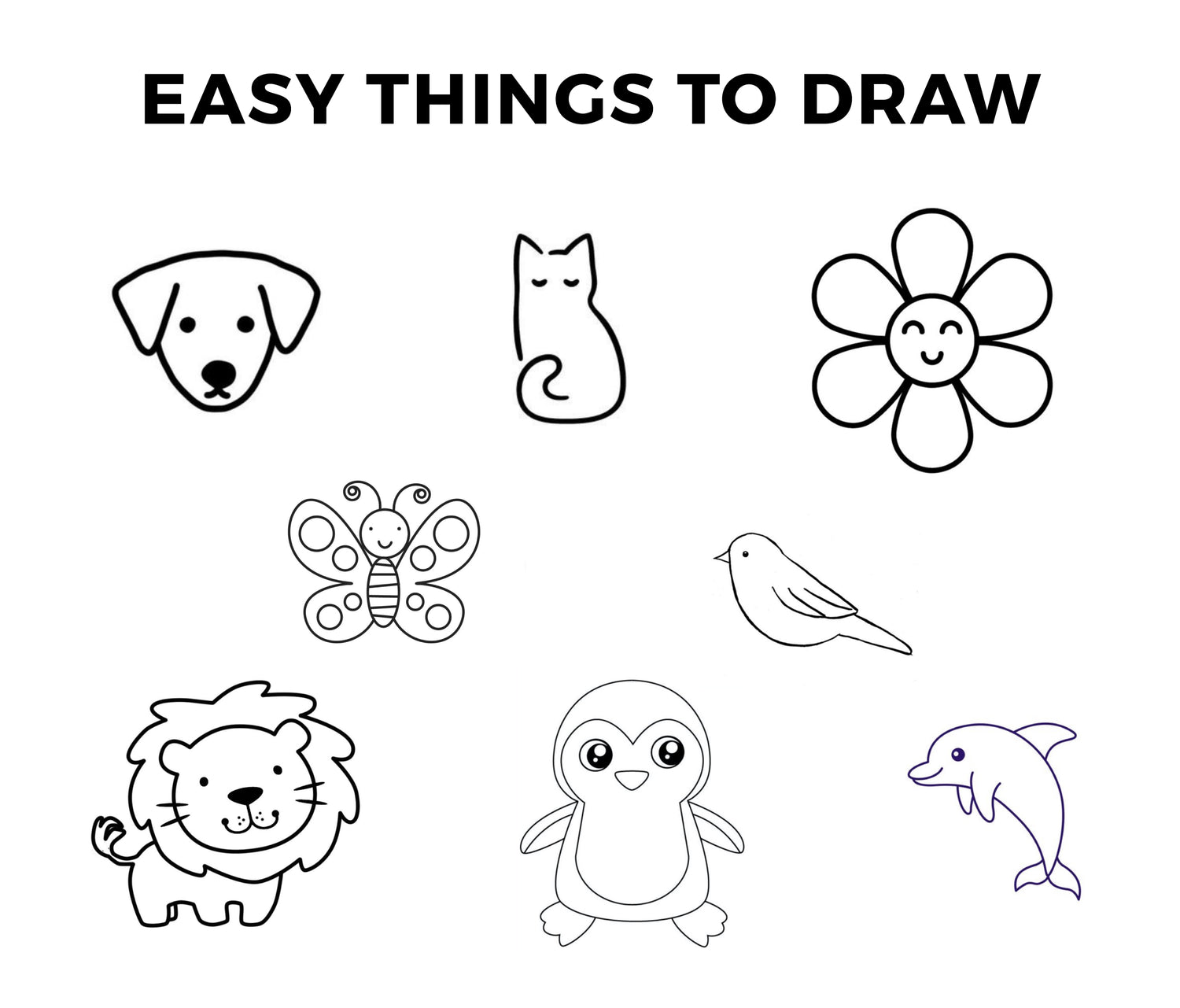
Easy Things to Draw (Drawing Ideas When You’re Bored) – CreativeBooster
Mouse Drawing For Kids Coloring Page Outline Of Cartoon Little Mouse

Mouse Drawing For Kids Coloring Page Outline Of Cartoon Little Mouse
How To Draw A German Shepherd Puppy - Art For Kids Hub
How To Draw A German Shepherd Puppy - Art For Kids Hub
How To Draw A Monkey Drawing - Infoupdate.org

How To Draw A Monkey Drawing - Infoupdate.org
How To Draw A Puppy For Kids Step By Step
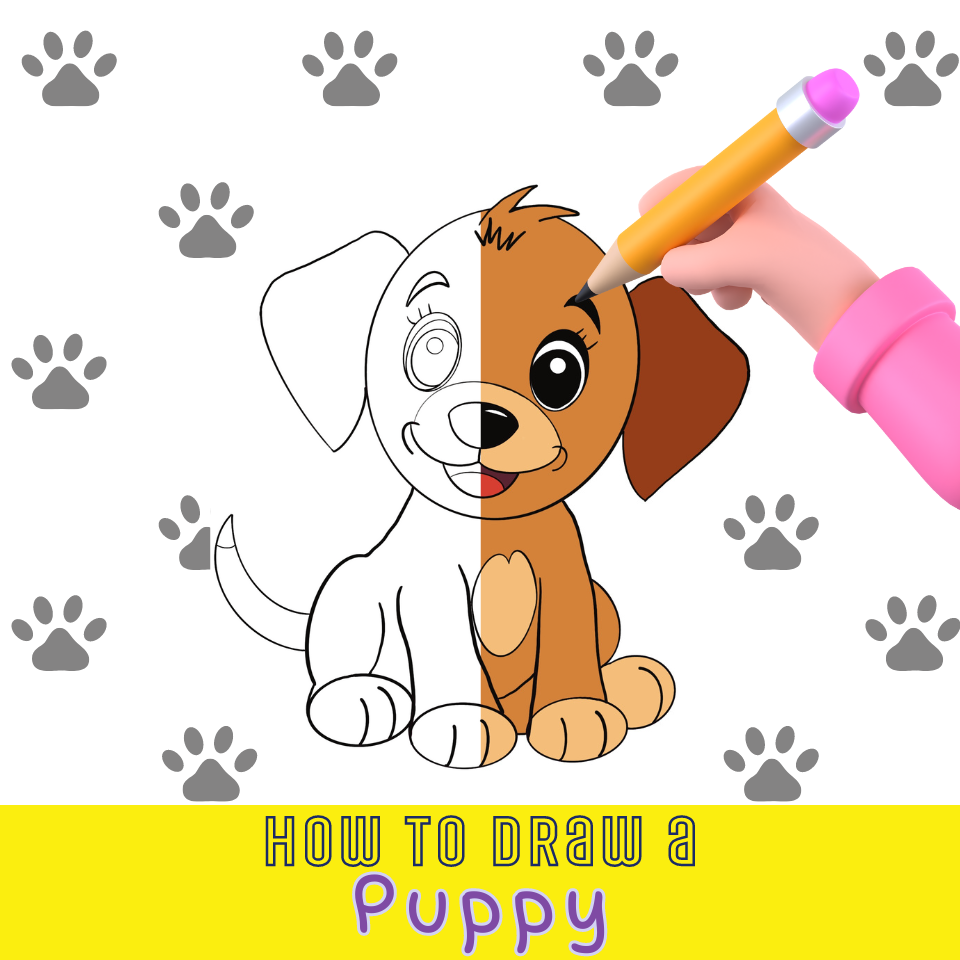
How To Draw A Puppy For Kids Step By Step